

The Role Of Evergreens In A Well-structured Garden
Evergreens play a defining role in the design of considered, long-lasting gardens. Beyond their obvious year-round presence, they provide structure, balance and clarity, supporting planting schemes through every season. When used thoughtfully, evergreen trees, shrubs and climbers form the backbone of a landscape, allowing both architecture and seasonal planting to perform at their best.


Year-Round Structure
Evergreens provide a permanent framework to gardens, maintaining structure, height and form throughout the year. In winter, when deciduous planting has receded, evergreen forms ensure the landscape remains legible and composed. This underlying structure is essential in larger gardens, where clear spatial definition prevents outdoor spaces from feeling exposed or unresolved during the colder months. Ferns planted beneath an Acer tree at our project, The Grove, for example, retain colour and interest once the autumn foliage has fallen, showing how evergreen-accent planting can extend seasonal impact.
Privacy And Screening
Tall evergreen hedges are invaluable for creating privacy, shelter and enclosure. Species such as Taxus baccata (Yew) offer dense, long-lived screening with a refined character, while Fagus sylvatica (Beech), although semi-evergreen, retains much of its foliage through winter and provides an elegant, softer alternative. Used as hedges or clipped forms, these plants define boundaries, create windbreaks and establish outdoor rooms without relying on fencing or hard structures. A substantial hedge at our Clearview Ridge project provides a private, serene backdrop, illustrating how evergreens can create both enclosure and compositional clarity.


Focal Points And Year-Round Interest
Evergreen trees and shrubs can be used as focal points, anchoring views and drawing the eye through the garden. Magnolia grandiflora brings presence through its glossy leaves and bold scale, while Pinus mugo offers strong architectural form, particularly effective in contemporary or naturalistic schemes. At our projects, Rosewood Manor and Rycote, Taxus domes act as elegant punctuation marks within the planting design, reinforcing structure and balance.
Colour And Texture
The diversity of foliage among evergreens introduces depth and variation, particularly valuable during low-light months. Pinus sylvestris contributes soft, feathery needles and subtle tonal shifts, while Ilex aquifolium offers a strong contrast with its glossy, dark green leaves and seasonal berries. At Greencroft, ferns and a mix of evergreen shrubs near the steps create layered texture and year-round colour, ensuring the garden remains visually engaging even in winter.

Contrast With Seasonal Planting
Evergreens act as a stable backdrop for seasonal planting, allowing perennials, bulbs and flowering shrubs to take centre stage when in bloom. This contrast enhances colour and form while ensuring the garden continues to feel full and intentional once flowering has passed. Thoughtful evergreen placement ensures that the garden remains balanced and cohesive year-round.
Wildlife Habitat
Dense evergreen shrubs and trees provide valuable shelter and nesting opportunities for birds and insects, particularly during winter. Species such as Holly, Yew, and Box (Buxus) contribute to biodiversity by providing protection, food sources, and year-round cover, supporting a healthier garden ecosystem while also enhancing compositional depth and structure.

Architectural Balance
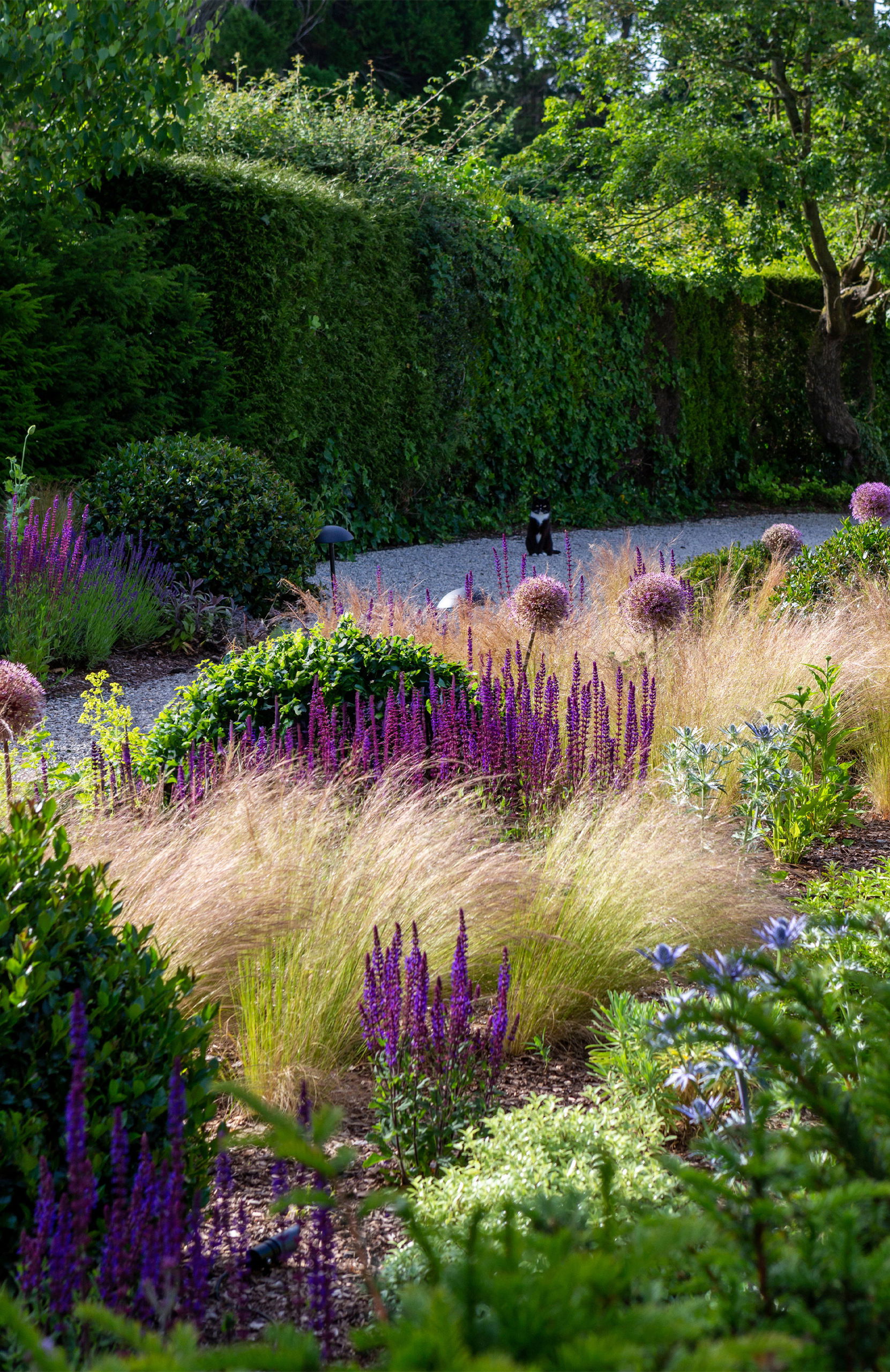
In landscape design, evergreens are essential tools for balancing built form and planting. They can anchor formal layouts, reinforce symmetry or soften hard edges within more relaxed schemes. Low-growing evergreen plants, such as Lavandula (evergreen varieties) or Ilex crenata, can frame paths and define borders with subtle clarity, while Viburnum tinus works effectively as a mid-border shrub, adding height, scent, and seasonal interest.
Softening Hardscapes
Evergreens are particularly effective in softening walls, fences and paved areas, helping gardens feel more integrated and welcoming. Climbing evergreens such as Hedera helix or Trachelospermum jasminoides can transform vertical surfaces, introducing texture, movement and seasonal detail without compromising structural clarity.

Low Maintenance, Long-Term Value
Many evergreens are well-suited to UK conditions, offering resilience and longevity with relatively low maintenance once established. Careful species selection and correct placement reduce the need for frequent pruning, making evergreen planting an efficient and enduring investment in the long-term quality of a garden.
Used with intention, evergreens underpin successful garden design. They provide clarity, permanence and balance, allowing landscapes to evolve gracefully while retaining their architectural strength throughout the year.
What’s Next?
Discover our latest Landscape Projects and follow us on our Landscapes Instagram page.
Whether you’re looking to design a stunning country estate or a unique urban garden, our Landscape Designers are on hand to create bespoke outdoor spaces that are thoughtfully considered and beautifully crafted, designed to delight and inspire for years to come.
Get in touch to get started.