

2026 Design Trends
As we move into 2026, certain trends are commanding attention by our clients. Each of our studios reveal the key design trends for the new year…
Architecture Trends
1. Designing With A Narrative
There is an increasing focus on designing homes that tell a story. Every project begins with our client’s aspirations, but it’s the distinct narrative behind each home that shapes our design approach. Whether inspired by the site’s heritage, the rhythms of family life, or the relationship between architecture and landscape, this story informs every decision – from spatial flow to materiality and framed views. It remains our constant reference point throughout the journey, ensuring the final home is not only beautifully considered and functional, but also enriched with a sense of place and meaning, which resonates on a personal level.
2. Framing Views
There is a growing trend towards deliberate framing of views within homes. Our architects are increasingly positioning windows and glazed openings to highlight meaningful aspects of the landscape, turning natural features into integral elements of the interior experience. Features such as projecting oriel windows, as seen in our Crinan Barn project, are becoming more popular, fostering a stronger connection between inside and out and allowing the daily experience of a home to be enriched by the shifting character of light and seasons.

3. Continuity Of Materials From Outdoor To Indoor
A seamless transition between interior and exterior spaces is seeing heightened emphasis. Extending materials such as natural stone or timber from inside the home into the garden is increasingly used to create visual continuity, enhancing spatial perception and encouraging fluid movement between home and landscape. Collaboration with landscape designers to maintain a consistent material palette is a trend that continues to gain traction, reinforcing the unity of architecture and environment.


4. Utilising Renewable Resources To Offset Energy Use
Growing consideration is being given to the integration of solar panels, air source heat pumps, and other systems from the earliest stages, ensuring technical performance is harmonised with architectural intent. This shift reflects a broader movement towards future-proof homes that can reduce — or even entirely offset — energy use, moving beyond efficiency to true self-sufficiency and future-proofing homes for generations to come.


Interior Design Trends
1. Maroon Interiors
Deep maroon is establishing itself as a considered, enduring colour choice. In a cloakroom, maroon walls with brass or black fittings create a confident, intimate space. Applied to joinery or cabinetry, the tone adds depth and refinement without overwhelming the architecture. Earthy yet striking, maroon continues to bring depth and drama, creating interiors that feel both grounded and compelling.


2. Statement Tiles
Tiles are becoming a central feature in interiors. Terracotta remains popular in boot rooms and utility areas for its warmth and durability, with modern appeal coming from the way this traditional material is handled — through distinctive formats, unusual shapes, and contemporary laying patterns that lend a fresh, elevated character. Within our own projects, bathrooms are increasingly defined by statement tiles that create a strong visual identity. At Larks Barn, bold patterns and carefully selected grout deliver a confident, graphic look, while Rowfield House showcases elongated, stripe-inspired tiles that bring movement and refinement to the space. Across all applications, thoughtful consideration of grout colour, tile orientation, and material performance ensures these surfaces remain both practical and visually impactful.


3. Wine Storage
Home wine storage is transitioning from discreet cellar rooms to integrated display solutions that combine utility with visual interest. Clients often request climate-controlled cabinets, minimalist shelving, or glass-fronted display units strategically positioned in dining or kitchen areas. This trend reflects a desire for spaces that merge lifestyle and functionality seamlessly.

4. Home Wellness
Wellness-led design is now a central consideration in luxury residential homes. Spatial layout, natural light, ventilation, and acoustics are coordinated to support relaxation and activity. Bathrooms are being treated as retreat spaces with spa-level finishes, while multi-functional rooms incorporate yoga, meditation, or exercise zones. The emphasis is on long-term comfort and mental well-being, not just aesthetics.


Landscape Design Trends
1. Year-Round Outdoor Spaces
Clients are seeking outdoor areas that work throughout the year, with covered dining and lounge spaces designed to complement the home’s architecture. Thoughtfully detailed roofs, integrated lighting and heating extend usability, while material choices and finishes are aligned with the property’s style. Careful attention to orientation, prevailing winds, and durable furnishings ensures these spaces are both comfortable and seamlessly integrated with the overall design.

2. Outdoor Pools
Pools are being designed as seamless extensions of the garden rather than standalone features. Infinity edges, minimalist surrounds, and naturalistic planting help integrate water into the landscape, creating a sense of calm and continuity. Technical elements—such as filtration, heating, and safety systems—are carefully concealed, ensuring the pool remains elegant and low-maintenance. Designs are tailored to the property, whether enhancing the proportions of a heritage home or complementing the clean lines of a contemporary new build, so the pool feels fully connected to both house and garden.


3. Grey Paving
A shift toward grey stone reflects client preference for a modern, understated palette that complements both contemporary and heritage contexts. Whilst limestone used to be in vogue, grey stone has a number of useful qualities: grey stone is less porous than limestone, more resilient to weathering, and offers a muted base that allows planting, furniture, and architecture to take visual priority. Careful selection of finish and jointing ensures durability while enhancing the paving’s aesthetic impact.


4. Outdoor Kitchens
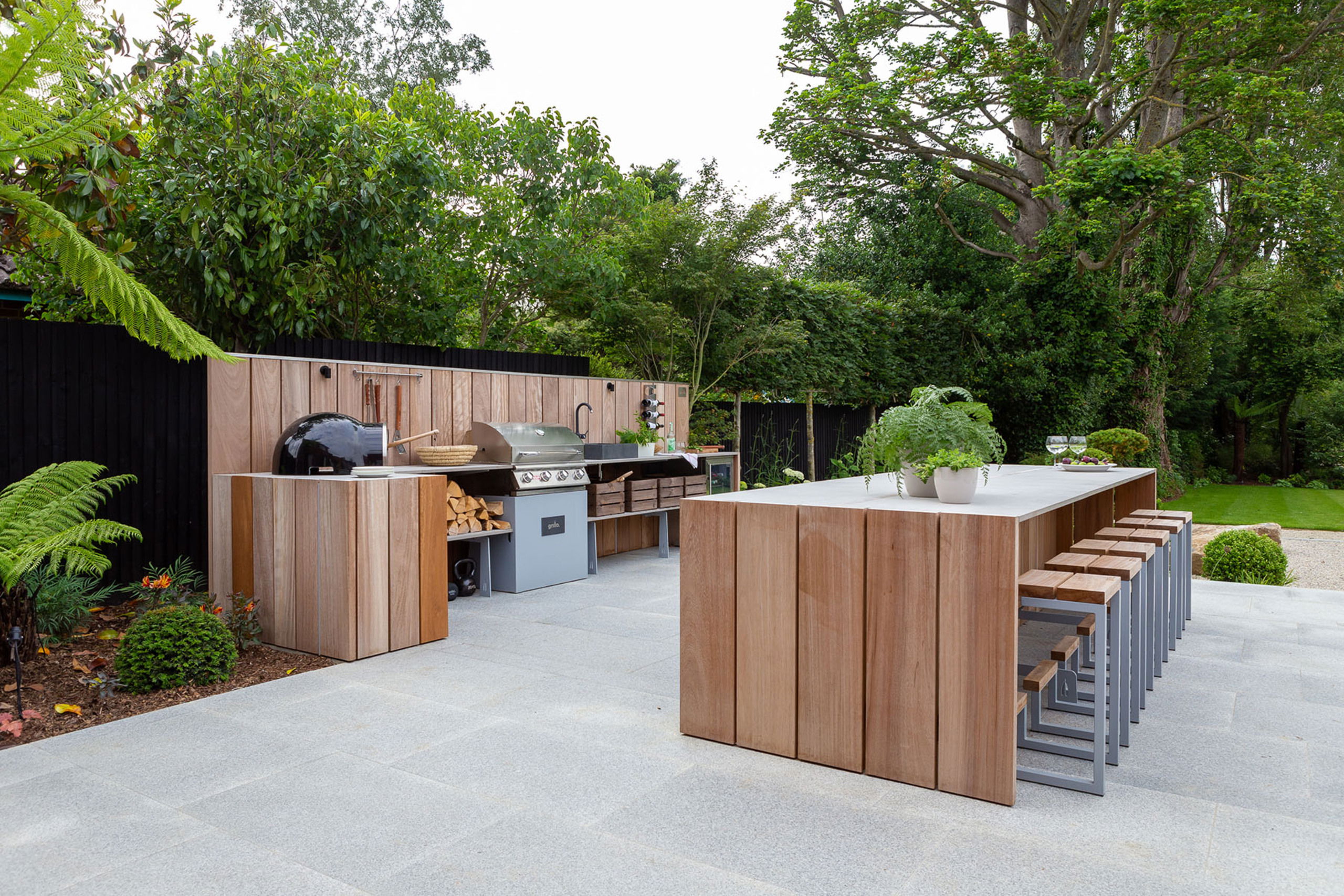
Outdoor kitchens are now highly considered spaces, combining performance, style, and entertainment. Clients are seeking expansive islands—often seating 12–14—that support both dining and social interaction, alongside high-spec features such as wood-fired pizza ovens, professional-grade barbecues, built-in fridges, and integrated wine coolers. Durable, weatherproof joinery and surfaces are paired with thoughtful lighting, ventilation, and drainage to ensure seamless functionality. Designs are tailored to the property, from contemporary minimalism to more material-led, textured schemes, creating outdoor kitchens that feel like a natural extension of the home and a focal point for year-round entertaining.
Taken together, these trends reflect a wider shift in how our clients want to live — with spaces that are expressive yet purposeful, technically advanced yet grounded in craftsmanship. Homes and gardens in 2026 are being designed as cohesive environments, where narrative, materiality, performance, and wellbeing are seamlessly aligned.
What’s Next?
Discover our latest Architecture Projects and Instagram page.
Whether you’re looking for a heritage renovation or an imaginative new-build home, our Architecture team is on hand to create thoughtfully-considered and beautifully-crafted homes that will leave a lasting legacy.
Get in touch to get started.